First, it’s important to choose if possible ‘Straight-Native’ or ‘Species’ plants. That is, examples that have not been selected and bred for a particular desirable trait, say, color or form. (Pollinating insects have evolved to look for characteristics of endemic plants matched to them by evolution.)
Plants propagated for desirable traits are known as varieties or ‘Nativars’. The nectar they offer may not match the true natives’ scent, nor, for example the expected taste or palatability, nor the original’s nutritional value. Similarly, ‘Cultivars’, developed from cuttings, hybridization or cloning may have lost not only taste, scent, and nutrition, but also the ability to reproduce.
This quick list is organized by period of bloom:
March-May
Wild Columbine (Eastern Red Columbine)
Golden Ragwort (Pakera)
June-July
Bee-Balm (Wild Bergamot)
Purple Coneflower
Black-Eyed Susan
Mountain Mint (Short-Toothed Mountain Mint; Clustered Mountain MInt)
Common Milkweed
Swamp Milkweed
Butterfly Milkweed (Prairie Milkweed)
(The milkweeds are not a source of nectar for pollinator species, but, for Monarch Butterflies, the source of nutrition for its larvae. Of the three, Butterfly Milkweed is the best-looking, though low in stature compared to the other two. Mountain Mint is short compared to Bee Balm and Coneflower.)
August-October
(Goldenrods are usually recommended, but this genus, and especially Canada Goldenrod can spread and take over a pollinator garden.)
New England Aster
New York Aster (Michaelmas Daisy)
Joe-Pye Weed
Ironweed
Joe-Pye Weed and Iron Weed get pretty tall compared to the asters. 
Click HERE to donate to the Green Space Initiative
Butterfly Artist Bios
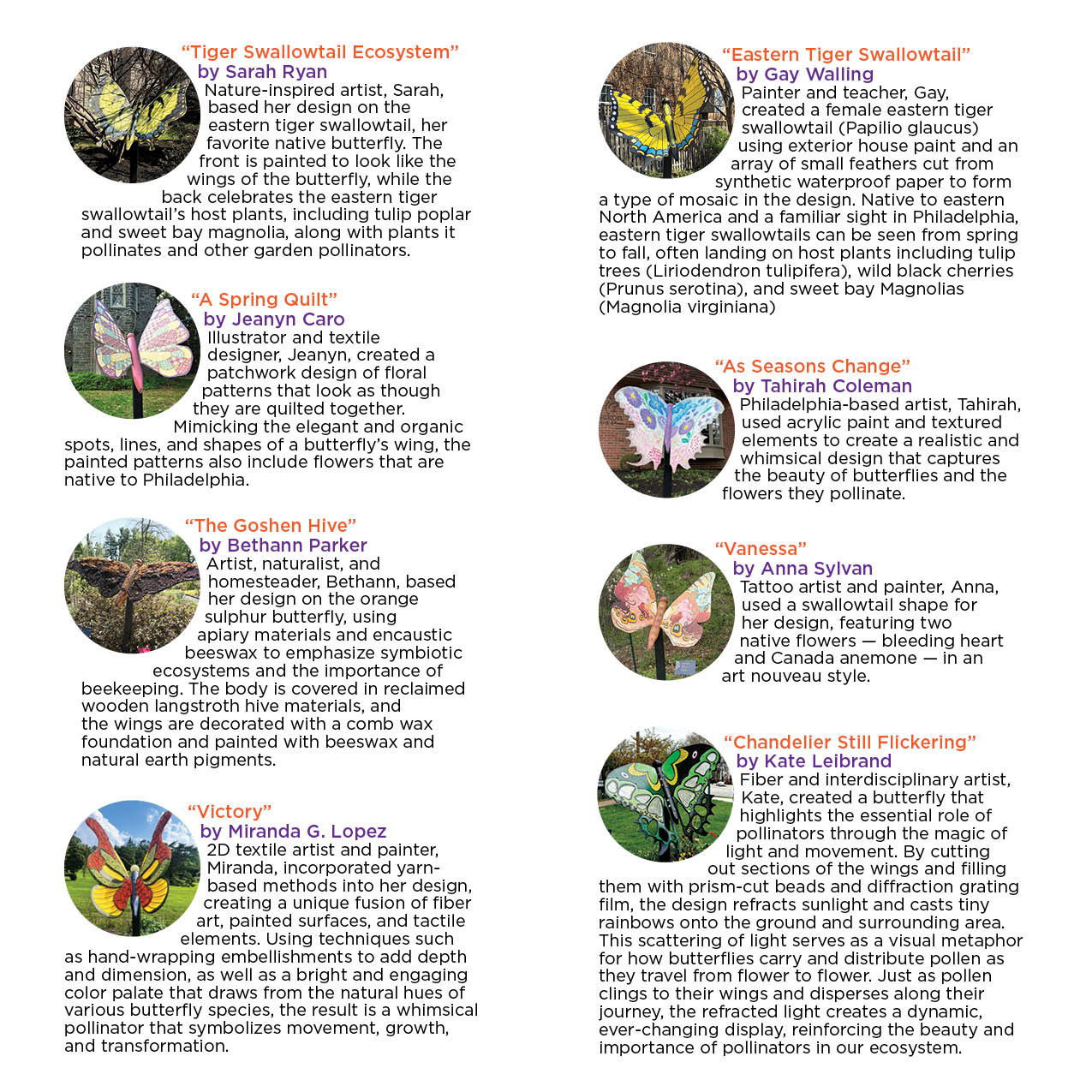
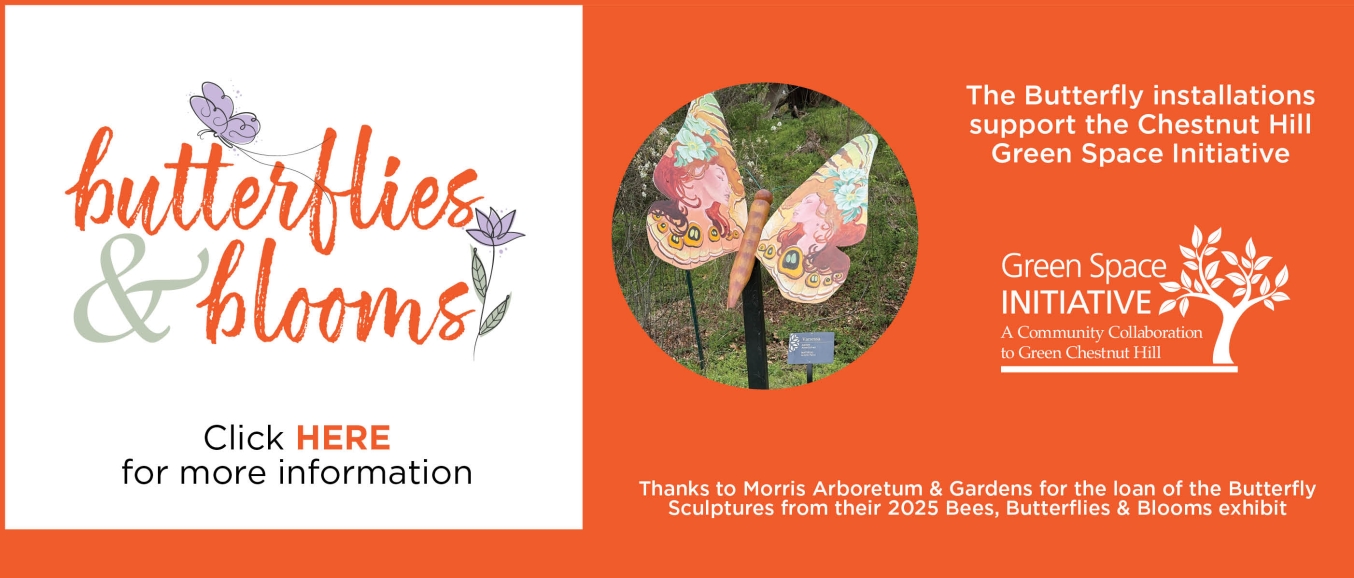
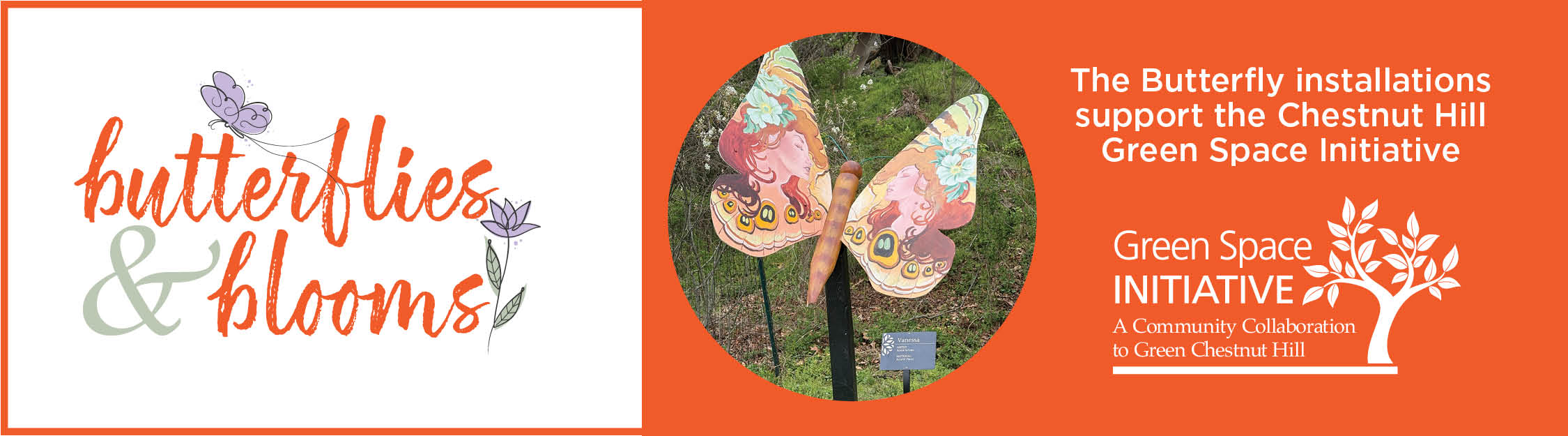
Thanks to Morris Arboretum & Gardens for the loan of the Butterfly Sculptures from their 2025 Bees, Butterflies & Blooms exhibit